Societies & Territories
  • Home
  • Understand a Society
    • Competency 1 Overview
    • Iroquoians around 1500
    • New France around 1645
    • New France around 1745
    • Lower Canada around 1820
    • Quebec around 1905
    • Quebec around 1980
  • Interpret Change
    • Competency 2 Overview
    • Iroquoians 1500 and 1745
    • New France 1645 and 1745
    • New France 1745 and Lower Canada 1820
    • Lower Canada 1820 and Quebec 1905
    • Quebec 1905 and 1980
  • Explore Diversity
    • Competency 3 Overview
    • Iroquoians and Algonquians
    • Iroquoians and the Incas
    • New France and the 13 Colonies
    • Quebec and The Prairies
    • The Prairies and the West Coast
    • Quebec and South Africa
    • Mi’kmaq and the Inuit
  • ☕️
  • Teachers
    • Resources by Society
    • Resources by Type
    • GHC Program Overview
    • Site Updates and News
    • Social Sciences Coffee Break ☕️
  • FR
  • Home
  • Understand a Society
    • Competency 1 Overview
    • Iroquoians around 1500
    • New France around 1645
    • New France around 1745
    • Lower Canada around 1820
    • Quebec around 1905
    • Quebec around 1980
  • Interpret Change
    • Competency 2 Overview
    • Iroquoians 1500 and 1745
    • New France 1645 and 1745
    • New France 1745 and Lower Canada 1820
    • Lower Canada 1820 and Quebec 1905
    • Quebec 1905 and 1980
  • Explore Diversity
    • Competency 3 Overview
    • Iroquoians and Algonquians
    • Iroquoians and the Incas
    • New France and the 13 Colonies
    • Quebec and The Prairies
    • The Prairies and the West Coast
    • Quebec and South Africa
    • Mi’kmaq and the Inuit
  • ☕️
  • Teachers
    • Resources by Society
    • Resources by Type
    • GHC Program Overview
    • Site Updates and News
    • Social Sciences Coffee Break ☕️
  • FR

Iroquoians around 1500 and 1745

Home » Interpret Change in a Society … over time! » Iroquoians around 1500 and 1745

Below is a side-by-side comparison of the pages contained in each of these two society sections of our website.

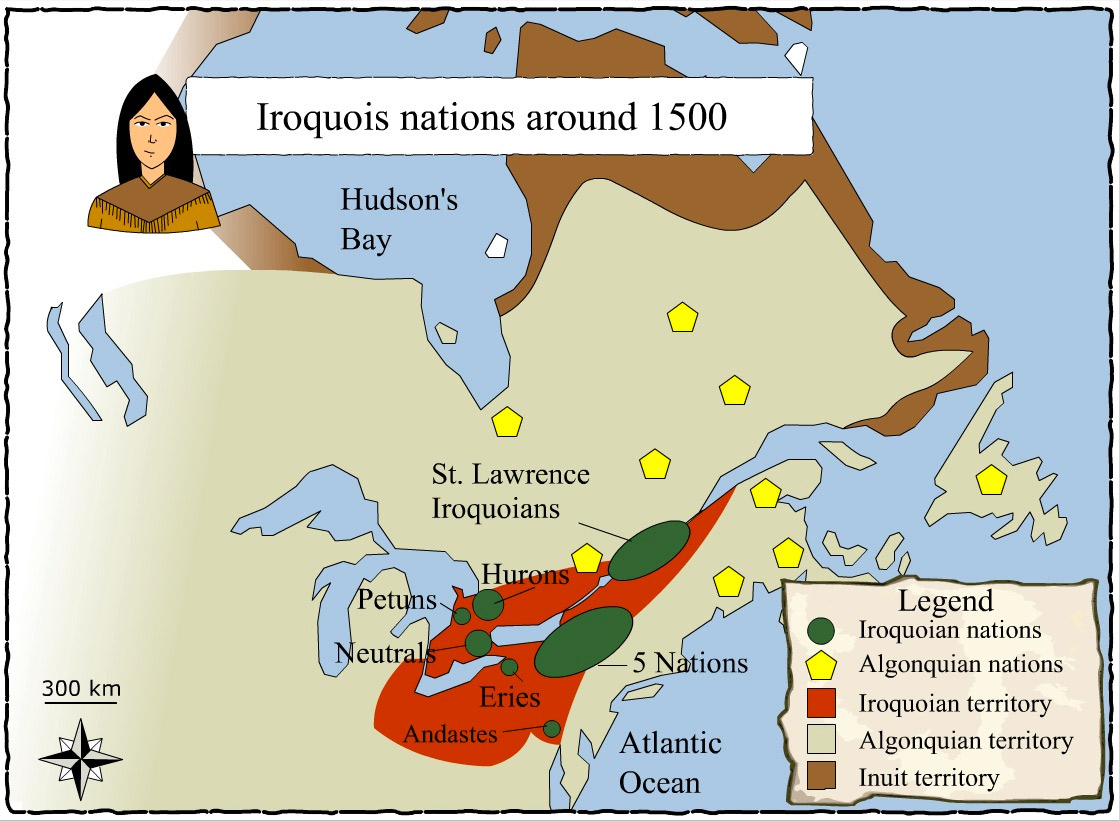
Iroquois nations 1500

Iroquoians in 1500 section

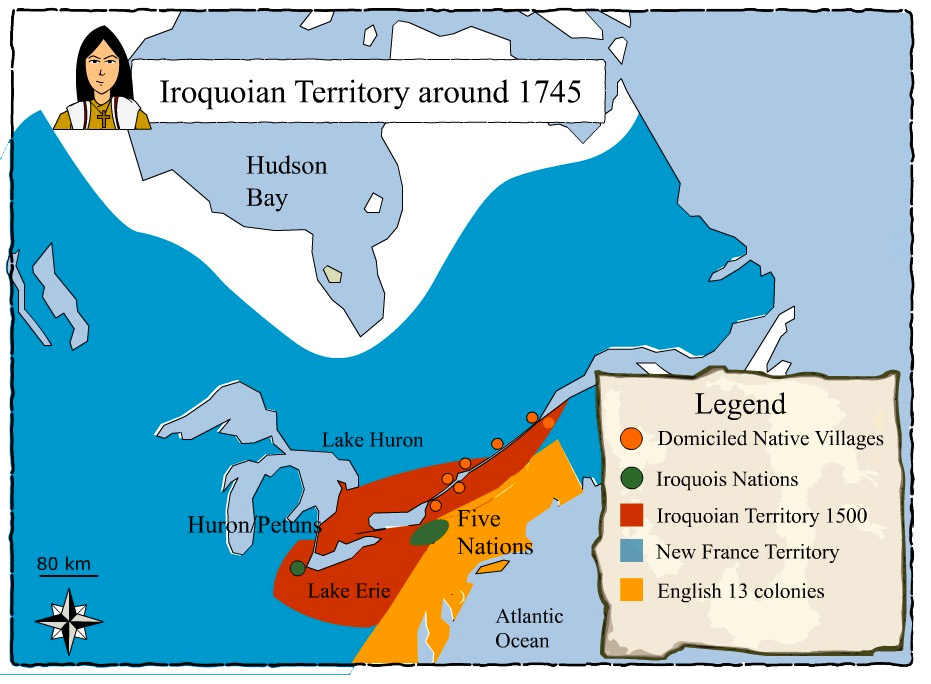
Iroquoian Territory 1745

Iroquoians in 1745 section

Territorial and PopulationPopulation comes from the Latin populus, meaning “the people.”  We say population when we talk about a group… changes
  • A territory rich in natural resources
  • Iroquois territory
  • Around 100 000 people
  • Daily life changed by European items
  • About 12,000 Iroquoians around 1745
Prominent Individuals
  • Donnacona
  • Kondiaronk
Social Groups
  • Iroquois Men
  • Iroquois Women
  • The Europeans
  • The role of men and women
Daily LifeDaily life is the things that you do every day as part of your normal life….
  • Life in a longhouse
  • Fun and games
  • A sedentary way of life
  • Corn porridge on the menu
  • Clothes for every season
  • Objects for every need
  • Daily life made easier with European products
  • Living in a mission
Language, Culture & Religion
  • Spirits and shamans
  • Surrounded by natural forces
  • Oral tradition: the word is king
  • One linguistic family, several dialects
  • Language
  • Catholics in the St. Lawrence Valley
Agriculture, commerceCommerce – Commerce means buying and selling items, goods, and services. Commerce – Le commerce consiste… & industry
  • Bartering: trading between nations
  • Survival by gathering, hunting, fishing, farming
  • Economic middlemen
Government
  • Organized by nation and confederation
  • The importance of the clan
  • The same organization, new relations
Transportation & Communication
  • Getting around: Rivers and forest trails
  • Influences on both sides
Click here for teacher resources to interpret changes in the Iroquoian Nations between 1500 and 1745.
  • FR

About the site

Contacts

© LEARN & RECITUS under BY-NC-SA.